Are you considering launching an activity selling products derived from hemp or cannabidiol?
Are you wondering about the legality of such an activity after all the legal twists and turns and regulatory changes that have occurred in recent months?
Here, in summary, is a small overview of the legal framework and current events on this issue.
Before December 2021
a- French regulations not in compliance with European law
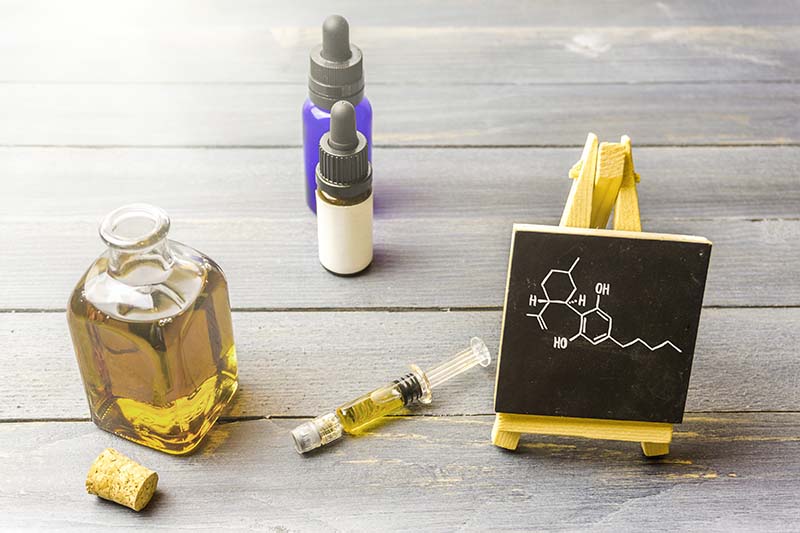
“Cannabidiol” (or CBD) is the substance, extracted from hemp, which has no intoxicating effect and is believed to have relaxing properties. CBD is not considered a narcotic and has therefore been considered legal since 2020, unlike tetrahydrocannabinol (THC – psychoactive molecule causing “cannabis intoxication”).
European regulations do not provide for any restrictions on the parts of the plant that can be used in the cultivation of hemp, nor on the uses that are made of it.
Thus, until December 2021, unlike several European countries, France only authorized cultivation and marketing hemp fibers and seeds, provided that their THC content is less than 0.2%. The finished products (foodstuffs, etc.) must therefore be free of any trace of THC. Thus, in practice, the regulations prohibited the marketing of products containing THC.
Indeed, according to article R.5132-86 of the Public Health Code, applicable to this period, the following were prohibited:
“the production, manufacture, transport, import, export, possession, offer, transfer, acquisition or use
- cannabis, its plant and its resin, products containing it or those obtained from cannabis, its plant or its resin;
- tetrahydrocannabinols (THC)
The decree of August 22, 1990, until then applicable, repealed in December 2021, further specified, in its article 1, that only were authorized, by exception, the cultivation, import, export and industrial and commercial use varieties of Cannabis sativa L. whose delta-9-tetrahydrocannabinol (THC) content is less than 0.20%.
The European courts, then French, clarified these rules, and dispelled the confusion that was still somewhat present.
b- The courts authorize CBD and reduce the scope of prohibitions
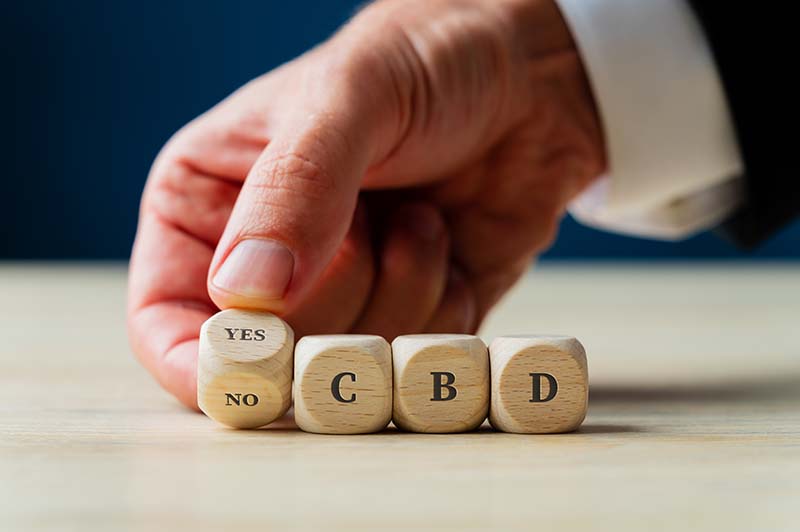
On November 19, 2020, the Court of Justice of the European Union (CJEU) lifted the ban on the sale of CBD. Based on the free movement of goods within the European Union, it deemed the ban in France on the marketing of cannabidiol (CBD) illegal, considering that cannabidiol “ legally produced in another Member State of the European Union when extracted from the entire cannabis sativa plant » has «no psychotropic effect or harmful effect on human health.” (CJEU Nov. 19, 2020, so-called Kanavape B.S. and C.A. case, case C-663/18, D. 2021. 1020).
Following in the footsteps of the CJEU, the Court of Cassation, at the national level, also took up the argument of the European jurisdiction.
In the context of a criminal case, which concerned the decision to close an establishment which marketed CBD-based products, the senior magistrates stated:
- on the one hand, that the marketing of products containing cannabidiol cannot be prohibited in the absence of proof that they fall into the category of narcotics;
- on the other hand, the sale in France of cannabis flowers at low THC content does not constitute an offense under drug legislation as long as these were legally produced in another Member State of the European Union. (Criminal. June 15, 2021, F-D, n° 18-86.932)
The trial judges thus observed that CBD is not included on the list of poisonous substances or on the list of narcotic substances. Consequently, in the absence of proven presence of THC in the seized products, the closure of the establishment could not be justified.
Additionally, the Court of Cassation recalled that the marketing of CBD cannot be banned in an EU member state if it is legally produced in another Member State. (Crim. June 23, 2021, FS-P, no. 20-84.212).
The Court of Cassation considered legal, de facto, the marketing of CBD.
Faced with these legal twists and turns and the uncertainty in which it still placed operators of legal CBD business, the legislator intervened, by modifying the applicable rules.
Since December 2021
a- The new prohibitions: marketing and consumption of flowers
The decree of December 30, 2021, repealing that of August 22, 1990, made several modifications to the authorizations and prohibitions
Thus the decree authorizes “ cultivation, import, export and industrial and commercial use » only varieties of Cannabis sativa L. whose delta-9-tetrahydrocannabinol (THC) content is less than 0.30%
In other words, the aforementioned varieties containing a THC level of less than 0.30% are considered non-narcotic products and their cultivation and marketing is therefore legal.
In addition, the decree brings several restrictions and prohibitions:
- The use of cannabis flowers and leaves is restricted: they can only be harvested, imported or used for the industrial production of hemp extracts, even when coming from a variety of Cannabis Sativa L. whose THC content is less than 0.30%,
- the sale to consumers of raw flowers or leaves in all their forms, alone or mixed with other ingredients, their possession by consumers and their consumption is prohibited,
- The cultivation of plants is supervised and authorized only to active farmers within the meaning of European and national regulations,
- The sale of plants and the practice of cuttings are prohibited.
The sale of CBD flowers represents a significant part of the activity of specialized stores. Therefore, these new bans on selling flowers to consumers were likely to impact merchants threatened by reductions in activity or even closure obligations.
b- The reaction of actors in the sector: legal recourse
In response to these threats and risks, numerous appeals have been initiated by players in the sector, in particular summary proceedings-suspension to the Council of State seeking to obtain, as a matter of urgency, the suspension of the provisions of the decree of December 30, 2021.
Seizure in summary proceedings-suspension, the Council of State ordered2 suspension of the ban on selling CBD flowers and leaves in the raw state. The summary judge considered that there is serious doubt about the legality of this absolute and general ban due to its disproportionate nature and considered that:
“it does not appear […] that the flowers and leaves of cannabis sativa L. with a THC content of less than 0.3% would present a degree of harm to health justifying a total and absolute ban […]” (Council of State 01/24/2022 decision No. 460055)
With this decision, the Council of State once again allows the cultivation of the cannabis plant for the production of CBD and the marketing of CBD flowers.
The Council of State must also rule in litigation on the legality of the decree, which suggests new legislative modifications in this still young economic sector…
To study the legal feasibility of your CBD business project, contact LEGALPROTECH!
- https://www.ladepeche.fr/2021/05/26/cbd-la-france-clarifie-la-loi-et-interdit-la-vente-des-fleurs-9566720.php
- https://www.liberation.fr/societe/sante/cbd-le-conseil-detat-invalide-linterdiction-des-fleurs-de-cannabis-20220124_TRQZG5QH25HUXLNNTQVC7IVUME/
By Samuel DENIN
Article published on August 31, 2022. Its content reflects the context of its publication.
A question about your situation? Contact the firm ↗