
21.8 million euros. This is the price of the most expensive work of street art in the world and it was created by the artist Banksy. Long considered an illegal practice, tags and graffiti now have their place in art galleries. We no longer talk about graffiti or graffiti artists, but about street art and street artists. In the West Indies, street art works are very present. You just need to take a stroll in Fort-de-France or Pointe-à-Pitre to admire them. But do artists know their rights and are aware of the protection their creations benefit from?
The changing status of street art works
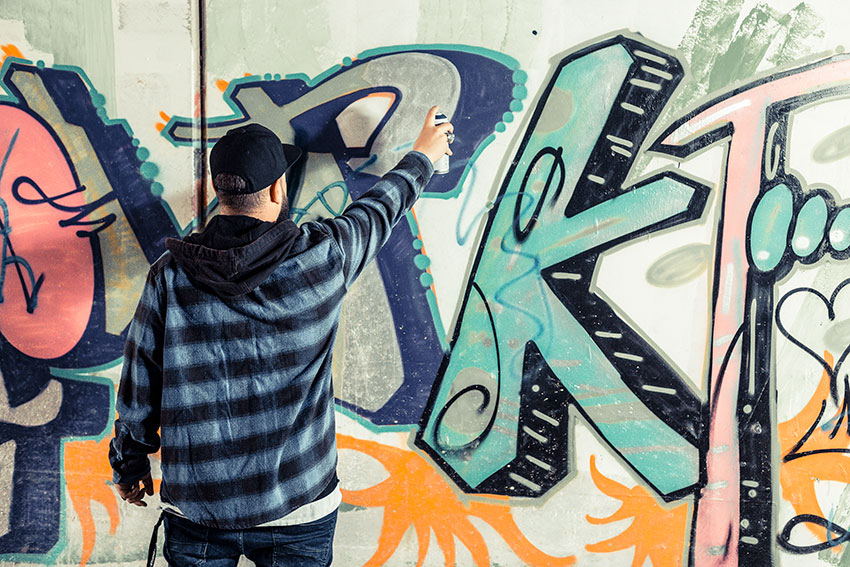
Street art, as its name suggests, was born in the street. Often used to convey messages of protest or as an act of rebellion, it was banned for a long time. A time considered marginal, it is an art which escapes frameworks and which is therefore difficult to understand by the law.
Thus, paradoxically, if works of street art are sometimes commissioned by communities or town halls, as is the case in the 13th arrondissement of Paris, street artists can also be condemned for damage to public property when they do not have authorization.
In this regard, article L322-1 of the Penal Code punishes with a fine of 3,750 euros and community service the act of drawing inscriptions, signs or drawings, without prior authorization, on facades, vehicles, public roads or street furniture.
The right to property being almost sacred in France, the same article punishes with two years’ imprisonment and a fine of 30,000 euros the destruction, damage or deterioration of property belonging to another. It is therefore strongly recommended that artists obtain prior authorization from the owners. This is also what the famous Miss Tic did before affixing her emblematic stencils since her conviction in 1999 for damage due to the affixing of a stencil on which was inscribed “Egeria and I cried”.
Despite these constraints, urban art continues to develop and tends to leave the streets to integrate art galleries and museums. A true expression of freedom, the practice of street art is in perfect harmony with the letter of the law of July 7, 2016 relating to freedom of creation, architecture and heritage which provides in its first article that “artistic creation is free”. This freedom had previously been enshrined by the European Court of Human Rights in 1988 which affirmed that “ those who create, perform, distribute or exhibit a work of art contribute to the exchange of ideas and opinions essential to a democratic society ” (ECHR, May 24, 1988, Müller and others v. Switzerland, application no. 10737/84).
Between artistic freedom and protection of private or public property, the line is thin and judges must find the right balance. Furthermore, we can also question the status of these works in relation to copyright.
Copyright protection
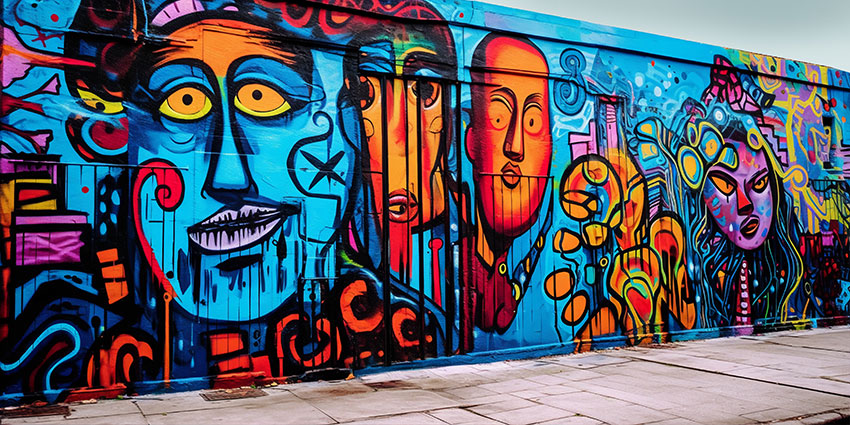
Article L112-1 of the Intellectual Property Code protects “all works of the mind, whatever their genre, form of expression, merit or destination”. Thus, no one can refuse protection to street art, provided that it is original, by invoking the fact that it is urban art.
Likewise, the fact of using a pseudonym or not signing the works cannot deprive street artists of the benefits of copyright protection (article L113-6 of the same code).
Finally, the ephemeral nature of the work does not remove its copyright protection. This is what the Paris Court of Appeal affirmed in a judgment relating to an artistic installation by the artist Christo who had wrapped the Pont-Neuf and its lampposts using a woven canvas (Paris Court of Appeal, March 13, 1986 85/16 542 Sté Sygma, Gamma, et a.c/J.C).
There is a distinction between the work and its support, because article L111-3 of the aforementioned code distinguishes between intangible property and property of the material object. This is why, in the absence of assignment of copyright, the artist remains the copyright holder, even if he has sold his work. This is particularly what we saw when Banksy self-destructed one of his works during an auction in 2018.
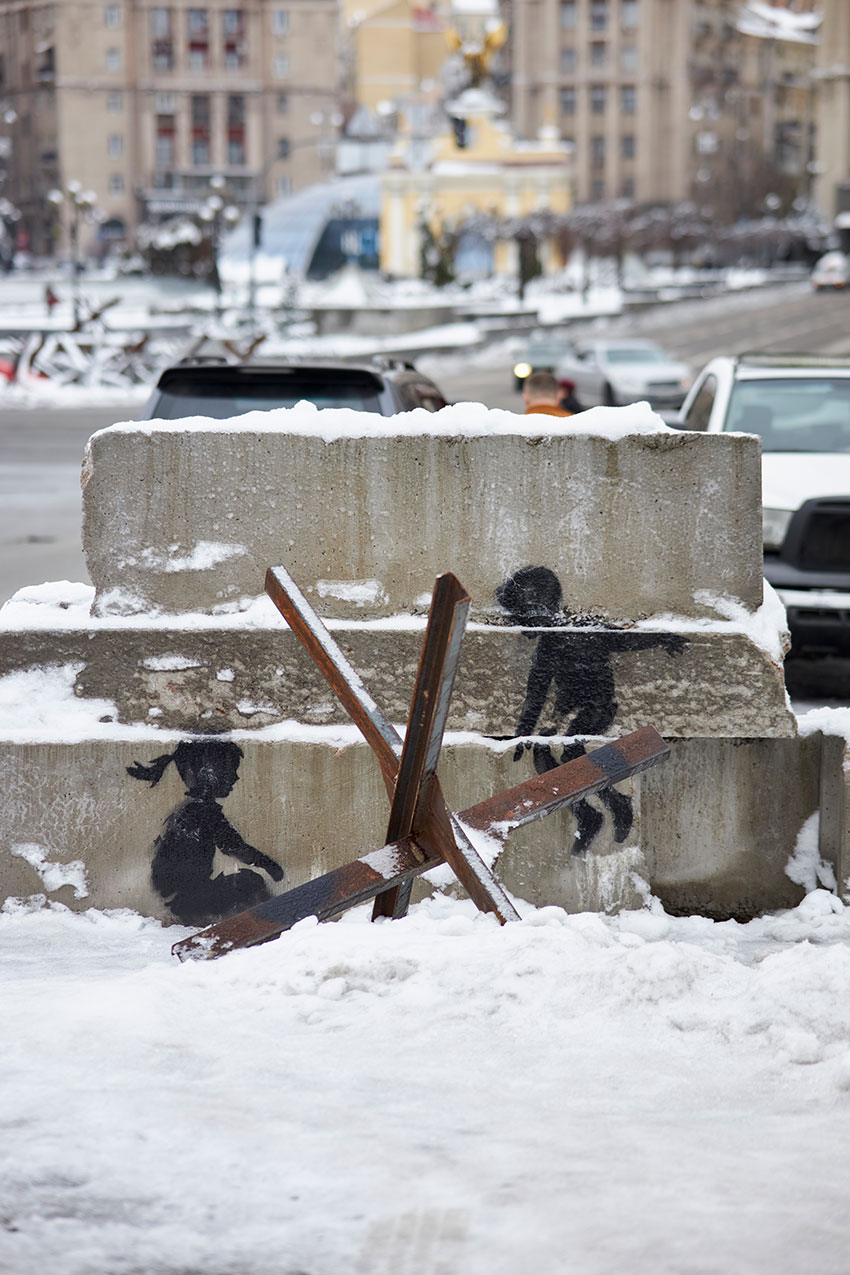
Although nothing seems to stand in the way of copyright protection for works of street art, their legal or illegal nature as well as the rights relating to private property should still be taken into consideration.
The Court of Cassation has repeatedly affirmed that the work must be lawful to benefit from copyright protection. Thus, in a judgment of September 28, 1999, it recognized that a pornographic work benefits from copyright protection in the absence of proof of its illegal nature (Cour de cassation, September 28, 1999, n°98-83.675).
Concerning street art specifically, the Court of Cassation affirmed that “the author of an illicit graphic work is deprived of the enjoyment of the rights he holds under literary and artistic property” and underlined the importance of investigating whether the artist had obtained express authorization from the owner prior to any affixing of graphic elements to its facade (Court of Cassation, Criminal, Criminal Chamber, June 20, 2018, 17-86.402).
If street artists must request authorization before displaying their works in public or private spaces, those who want to exploit these works must obtain authorization from these artists. Indeed, recent case law has evolved significantly and fully considers street art as an intellectual work deserving protection. This is shown by the resounding judgment of July 5, 2023 which condemned Jean-Luc Mélenchon and France Insoumise for using a work by the artist Combo in a campaign clip without his authorization (Paris Court of Appeal – Pôle 5 – Chamber 1, July 5, 2023 / n° 21/11317).
Whether you are a street artist or want to use street art works, do not hesitate to contact the LegalProtech-Avocats firm who will be able to support you in the defense and promotion of your rights.
By Kelly PHAETON
Article published on June 3, 2024. Its content reflects the context of its publication.
A question about your situation? Contact the firm ↗