The second “Global Forum on Artificial Intelligence Ethics: Transforming AI Governance” took place on February 5-6, 2024 in Slovenia.
Indeed, good governance of artificial intelligence (AI) is a major challenge of our time, which requires learning based on good practices emerging from different jurisdictions around the world. The rapid changes brought about by this development also raise significant ethical and professional concerns. No other field requires an ethical compass as much as artificial intelligence, because these versatile technologies are profoundly transforming the way we work, interact and live.
While ethics designates the set of rules and duties that govern a profession, the conduct of those who practice it, the relationships between them and their clients and the public, we can easily identify the threats that AI poses to it, particularly in the field of law. Indeed, ethics is put to the test when artificial intelligence threatens the fundamental rights of individuals (I) and the concept of intellectual property (II).
The threat of respect
fundamental rights
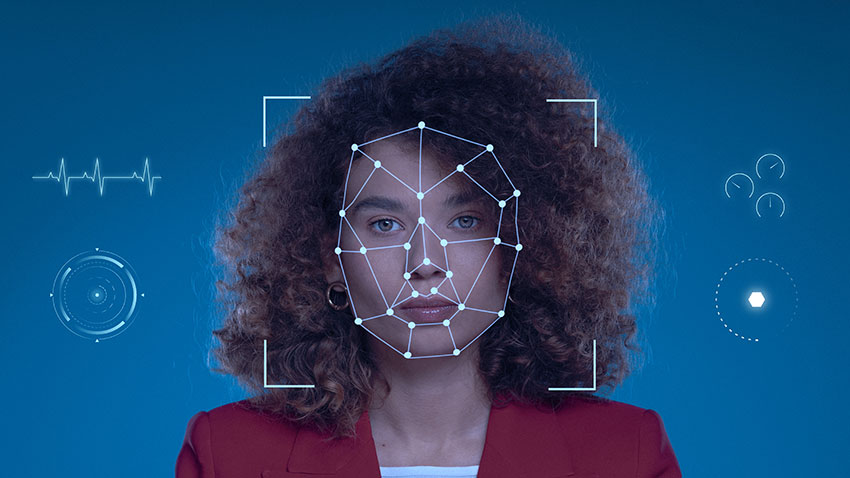
Artificial intelligence represents a major technological advance, but its rapid growth raises concerns about the risks of violation of fundamental rights. As AI becomes integrated into various areas such as surveillance, employment, decision-making etc., issues related to privacy, discrimination and transparency are becoming major areas of concern.
The threat to the right to privacy

One of the main fundamental rights that is threatened by AI is that of right to protection of privacy. Indeed, AI systems, often powered by large data sets, can collect, analyze and interpret personal information exhaustively. This raises questions about the right of individuals to control their data and their ability to maintain privacy. Applications such as mass surveillance through security cameras equipped with advanced image analysis technologies can potentially violate the right to privacy, by recording and analyzing the movements of individuals without their consent.
The inherent risk of discrimination in AI

Then, the discrimination intrinsic AI systems is another major source of concern. Algorithms can reflect and perpetuate biases present in the data they are trained on. This can result in unfair discrimination in crucial areas such as recruiting, lending, or even the justice system. For example, if an algorithm is trained on biased historical data, it can reproduce these biases by favoring certain groups over others, thus amplifying pre-existing inequalities.
However, if we wanted to prevent AI from reproducing the social and cultural stereotypes to which it is subject, then the creator himself would have to modify the AI systems. But then, how can we ensure that the creator is able to choose which values to integrate, which biases and stereotypes are good or bad.
The risk of lack of transparency in data processing

The transparency and the liability are also essential aspects of ethics in the use of AI. Decisions made by automated systems can often seem opaque, because the internal workings of the algorithms are complex and difficult to understand. This poses a challenge to information law, because individuals may find themselves unable to understand or challenge decisions that concern them. Increased transparency in how AI systems make decisions is crucial to ensuring accountability and enabling adequate oversight.
In this regard, the GDPR (General Data Protection Regulation) strictly regulates fully automated decision-making processes, and article 22 of the regulation states in particular that individuals have the right not to be the subject of a decision based exclusively on automated processing, producing legal effects or significantly affecting them. They have the right to require human intervention in the process.
Indeed, to mitigate these risks, it is imperative to put in place appropriate safeguards and regulations.
In this context, the member states of the European Union adopted on February 2, 2024 the final text of the regulation on artificial intelligence (IA Act), which will be put to a vote by parliament in mid-April. This text provides for regulation of artificial intelligence systems (AIS) according to a classification by level of risk, i.e. precisely 4 risk levels.
The risks are qualified unacceptable, high, limited or minimal depending on their nature. For example, while social scoring and biometric identification or the recognition of emotions in professional and educational environments are described as unacceptable, in accordance with the analysis of the European Court of Human Rights (ECHR) which had already recommended banning them, banking scoring is categorized as high while anti-spam filters are classified as limited.
The obligations incumbent on the supplier or user of the AI depend on the risk classification. For example, while “unacceptable” risk makes use prohibited, “high” risk makes SIA compliance measures mandatory (recording of activities, user information, human intervention, etc.). Limited risk implies simplified measures. In order to ensure compliance by all SIA operators designed within the EU or simply dealing on the European market, the IA Act provides for financial sanctions of up to 30 million euros or 7% of consolidated annual turnover.
In addition, the National Consultative Commission on Human Rights CNCDH also recommends imposing requirements on the users of an AI system capable of guaranteeing respect for fundamental rights: an impact study, consultation of stakeholders, supervision of the system throughout its life cycle.
TheIA Act, voted on February 2, a few weeks after the New York Times sued Open AI, on December 23, 2023, for copyright infringement, also emphasizes the need for protection of intellectual property.
The threat of respect for intellectual property
The difficult implementation of respect for copyright
The increasing integration of artificial intelligence into our daily lives also raises major concerns regarding copyright implications. The essential raw material for AI is data. However, access, use and exploitation of this data pose significant risks in terms of respect for intellectual property rights.
Machine learning, the foundation of AI, is based on example inputs and expected results, called structured data or learning data. This process allows the system to continually improve, making decisions without requiring step-by-step programming. The analogy with the biological mechanism for acquiring cognitive faculties reinforces the idea of the adaptability inherent in AI, but simultaneously raises challenges related to respecting copyright.
Since June 2023, the Open AI company has faced a minimum of five complaints filed by authors who accuse him of having used their writings to train his artificial intelligences, without obtaining the necessary authorization or providing compensation. Among the complainants, the Authors Guild, an association bringing together more than 14,000 American writers, joined forces with the creator of Game of Thrones to express these grievances. Actress Sarah Silverman also joined the group, defending her memoir. Similarly, novelists and essayists Jonathan Franzen and John Grisham have filed complaints related to unauthorized use of their works.
The proposal for a regulation of the European Parliament and of the Council on fair access to data, issued on February 23, 2022, underlines the importance of the question of access to data by AI. In addition to personal data, the first question AI designers must answer concerns the nature of the training data needed. Is this data open access, available as open data, or are they protected by copyright, related rights, or even included in a database protected by the sui generis right of the database producer? If the necessary data is subject to intellectual property rights, a second question emerges concerning the technical modalities of access, reproduction and integration into the final result. This raises complex challenges in terms of copyright enforcement and requires careful consideration of legal means to facilitate this access while preserving the rights of rights holders.

The nature of the product resulting from the use of AI is also a determining factor. Designers should consider whether the final product contains elements protected by copyright or other intellectual property rights. This assessment is crucial to determine the legitimacy of the use of the data and guide the legal strategy to be put in place.
To address these challenges, legal solutions must be considered, such as the implementation of the text and data mining exception, allowing free access to protected data in the context of machine learning.
Indeed, France has transposed the provisions of the 2019 European copyright directive, particularly including the provisions establishing exceptions to copyright for text and data mining. By text and data mining we mean the implementation of an automated analysis technique of texts and data in digital form in order to extract information, in particular constants, trends and correlations. It is stipulated that text and data mining cannot be contested by copyright holders, if it is carried out “for the sole purposes of scientific research by research organizations, libraries accessible to the public, museums, archive services or institutions depository of cinematographic, audiovisual or sound heritage”.. Thanks to this exception, the use of data for AI can be done legally and without infringing copyright, being supervised and regulated to avoid any abuse.
The risks AI poses to copyright require a balanced and thoughtful approach. Regulations, such as the European proposal on fair access to data, provide an initial framework, but it is essential to continue to develop appropriate legal mechanisms to ensure a fair balance between technological innovation and the protection of intellectual property rights.
The legal void regarding the ownership and liability of generative AI
The question of the responsibility of generative artificial intelligence lies at the complex intersection of French copyright and the characteristics specific to the creations produced by these emerging technologies.
The copyright framework in France protects “intellectual works” provided that they are considered “original”. The notion of originality implies the presence of the imprint of the author’s personality, resulting from free and creative choices. However, two major questions arise in relation to generative AI: firstly, can we attribute authorship to the AI tool ? Secondly, the can creations generated by an AI really be qualified as original? ?
According to French law, only a natural person can claim authorship, with an exception for legal entities associated with copyright relating to a collective work. Thus, a machine or software cannot be recognized as an author within the meaning of the Intellectual Property Code in France.
The trigger for AI-generated creations remains human intervention, where an individual gives instructions to the tool. However, the crucial question arises: can this person, by giving instructions, be considered the author within the meaning of the Intellectual Property Code? The answer seems difficult to affirm positively, especially with regard to the raw results generated by the tool. These results remain unpredictable for the user, because simple variations in a few keywords can lead to drastic variations in the content generated by the AI.
In the context where the user does not have total control over the results produced by the AI, it becomes difficult to argue that these results bear the imprint of his personality. However, an important nuance emerges when the AI-generated result is reworked by the user. In this case, the subsequent work may benefit from copyright protection, as long as it meets the originality requirements of the Intellectual Property Code.
In short, the liability of generative AI in the context of French copyright remains a delicate question. The lack of recognition of the machine as author highlights the need to explore legal mechanisms that take into account the complexity of interactions between humans and AI in the creative process, while preserving the legitimate rights of the parties involved.
Faced with the complex issues of ethics and artificial intelligence, LEGALPROTECH-AVOCATS remains committed to providing adapted and innovative legal solutions. Drawing on our legal practice in this constantly evolving field, we are ready to support our clients in navigating the legal challenges related to AI. If you are looking for specialist legal advice to ensure ethical and compliant use of AI, please do not hesitate to contact us. We are here to offer you professional and personalized support, guaranteeing a rigorous legal approach.
By Aurélia Jauffrineau and Christelle Reyno
Article published on February 28, 2024. Its content reflects the context of its publication.
A question about your situation? Contact the firm ↗