The digital age has had a major impact on us, whether in the professional world or in the private sphere. Thus, many professions have emerged, including that of influencer. The appearance of these new professions was accompanied by numerous abuses and abuses relayed by social networks, denounced by public figures.
However, what is an influencer?
This is Law No. 2023-451 of June 9, 2023 on the supervision of commercial influence and the fight against the abuses of influencers on social networks which gives us the answer.
Indeed, in her first article, she gives us the following definition:
“Natural or legal persons who, for a fee, mobilize their notoriety among their audience to communicate to the public, by electronic means, content aimed at promoting, directly or indirectly, goods, services or any cause exercise the activity of commercial influence by electronic means. ».
This law made it possible to insert a real legal framework around the profession of influencer, thus making it possible to fight against abuses and scams of which consumers can be victims. In addition to these new legal provisions, it should be remembered that this profession remains subject to an arsenal of legal provisions including prohibitions and sanctions. This article will also be an opportunity to recall the other rules applicable to influencers, as well as to make an aside about child influencers.
The supervision of the role of influencer by law no. 2023-451 of June 9, 2023
The establishment of civil liability for the influencer
The influencer is responsible for all content he publishes on online platforms. Article 8 of the law of June 9, 2023 on influencers introduced in particular an obligation to enter into written contracts with brands, in which mandatory clauses must appear. The aim is to define the responsibility of each party of the contract towards the consumer. In addition, the majority of content creators having an impact on a French audience located outside the European Union, mainly in Dubai, article 9 of this same law requires these influencers to “ensure a form of legal representation on the territory of the European Union”.
To go further, parliamentarians, through article 8, introduced joint and several civil liability between the advertiser and the influencer, in order to protect consumers in the event of damage caused during the execution of this contract. These articles reveal a strong desire to protect consumers from possible abuses or scams resulting from these collaborations.
Strengthening content consumer protection
Commercial influence activity was already legally regulated. In fact, the regulations applying to the advertising of tobacco and vaping products, alcoholic beverages, medicines, medical devices and even financial products and services already applied to online advertising promotion activity.
For example, Law No. 2004-575 of June 21, 2004 (article 20) for confidence in the digital economy, provides that any advertising, in whatever form, accessible by an online public communication service, must be able to be clearly perceived as such and make the natural or legal person on whose behalf it is carried out clearly identifiable.
The law of June 9, 2023 on influencers reinforces these obligations in order to protect consumers. Article 5 of the law of June 9, 2023 introduces a duty of transparency incumbent on the influencer vis-à-vis their community: “ The promotion of goods, services or any cause carried out by the persons mentioned in article 1 must be explicitly indicated by the mention “Advertising” or the mention “Commercial collaboration”. This notice is clear, readable and identifiable on the image or video, in all formats, during the entire promotion ”. Indeed, it is important for the consumer to know that this promotion of a brand is not completely disinterested. This article also creates new information obligations that the influencer must respect: this involves mentioning the use of filters and photo retouching in advertising content. The aim of this information obligation is to prevent scams of which consumers are often victims, and for which a French rapper had echoed by denouncing them on social networks. To go further, parliamentarians introduced very detailed rules into this law concerning sales and dropshipping, which are often controversial practices. In order to guarantee compliance with these new rules, parliamentarians have introduced restrictions and sanctions into the influencer law.
The introduction of restrictions and prohibitions

Law No. 2023-451 on commercial influence, in Article 3, recalls certain advertising bans and authorizations resulting from the Consumer Code, the Public Health Code, the Sports Code, the Monetary and Financial Code, and Regulation No. 1924/2006 relating to foodstuffs, by imposing them on influencers.
Restrictions applicable to certain categories of products: for example, the promotion of tobacco, tobacco products or medications subject to medical prescription, prohibited by the Public Health Code, is also prohibited for influencers.
Online commercial influence must respect the same advertising bans or regulations as other media.
Furthermore, specific bans on online commercial influence have been introduced, in particularly sensitive sectors.
- In the field of health: the advertising of acts, processes, techniques and methods with aesthetic aims (provided for by article L. 1151-2 of the Public Health Code), cosmetic surgery interventions (article L. 6322-1 of the same code), as well as products, acts, processes, techniques or methods, presented as comparable, preferable or substitutable to acts, protocols or therapeutic prescriptions is prohibited.
- Advertising of products considered to be nicotine products that can be consumed is also prohibited.
- In the financial sector, the promotion of risky financial products (art. 533-12-7 of the Monetary and Financial Code) is prohibited while for other products such as digital assets or public token offerings, advertising is subject to authorization.
- The promotion of subscriptions to sports advice or predictions is also prohibited.
- Acts involving animals not belonging to the list of domestic animals (C. envir., art. L. 413-1 A) are also prohibited.
Sanctions against content creators

For any breach of these rules, influencers can risk a sentence of 2 years of imprisonment and heavy fines of up to 300,000 euros. This can even lead to a ban on working as an influencer. In addition to these measures, all the sanctions provided for either by the Consumer Code or by the Internal Security Code remain applicable. The determination of parliamentarians to protect web users has led them to strengthen the control systems of social platforms by using, for example, trusted flaggers, that is to say, favoring reports from people known by the platforms to regularly report illicit content.
The injunction powers of the DGCCRF (General Directorate for Competition, Consumer Affairs and Fraud Control) are also reinforced (article 13 of Law No. 2023-451): thus the compliance injunctions issued may be accompanied by a daily penalty, and a formal notice to publish the injunction decision.
Influencer: what other rules apply?
Other obligations / rights applicable to the profession of influencer
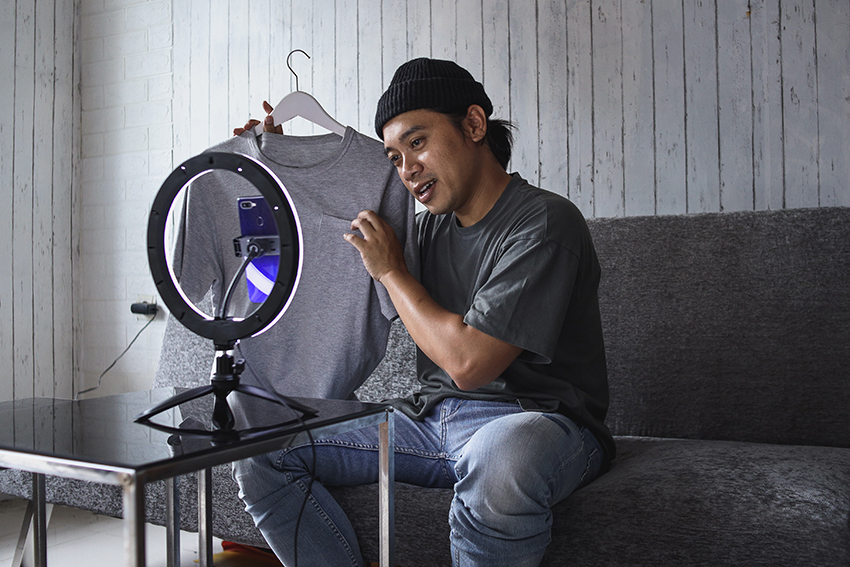
Thus, the main objective of influencers is to promote a brand by publishing promotional content on different social platforms. However, their publications remain subject to copyright as set out in article L.111-1 of the Intellectual Property Code. Indeed, this article automatically establishes the principle of copyright protection on each image taken by their author. As a result, their content is protected by law.
However, although their content is subject to these rules, they must also respect this right and exercise caution before using the work of a third party for their promotional activities on social networks. It is therefore necessary to obtain the consent of the author of any work before being able to exploit it.
Furthermore, despite their notoriety, influencers also have image rights. This means that they have the full right to accept or refuse the publication of an image or video of their image to a third party. These rights are important in this area where plagiarism and content theft are often present.
In this rapidly expanding area of commercial influence, we find new actors in society who were until now not concerned with the world of work: these are children.
The particular case of child influencers
Indeed, this increasingly present phenomenon gives rise to new problems, notably that of forced labor of minors. It is true that this practice can be very dangerous. It often involves exposing your child on social networks by sharing images and videos to promote a brand or a company, for profit. However, it is important to remember that the responsibility for protecting children lies with their legal guardians. As a result, several areas collide: children’s rights, labor law, legal responsibility… Faced with these questions, it became urgent to protect the world’s children from commercial influence.
It is in this context that the law of October 9, 2020 was promulgated aimed at regulating the commercial exploitation of the images of children under the age of sixteen on online platforms. This law made it possible to introduce a right for child influencers under the age of 16 in order to guarantee their safety and health. Thus, child “influencers” benefit from this law from the protective rules of the Labor Code, in the same way as child models, entertainment and advertising.
Since this law, it has become obligatory for the legal guardian of a child under the age of sixteen to obtain prior individual authorization, granted by the administrative authority, for distribution for profit on an online platform service by an employer whose activity consists of making audiovisual recordings (Article L. 7124-1 of the Labor Code).
If the child influencer’s activity does not fall under an employer-employee type employment relationship, parents must deposit a portion of their child influencer’s income to the Caisse des Dépôts et Consignations, beyond a certain number of videos or income, until they reach the age of majority or are emancipated.
Finally, minor children can directly exercise the right to erasure or to be forgotten, provided for by the Data Protection Act of January 6, 1978, with video platforms, without parental consent.
These provisions on child influencers will be supplemented by additional rules applying to the protection of the privacy of young minors. At the time of writing, the National Assembly is examining a proposed law aimed at guaranteeing respect for children’s image rights.
The provisions of this future law aim to better protect the image rights of children on the internet, in particular by establishing:
- An obligation of parents to ensure respect for the privacy and image rights of their child, within the framework of their parental authority;
- The ability for the family court judge to prohibit a parent from publishing or distributing any image of their child without the agreement of the other parent;
- A common obligation for parents to involve the child in the exercise of their image rights, according to their age and degree of maturity;
- A forced partial delegation of parental authority in the event of dissemination of the image of the child seriously undermining his dignity or moral integrity.
- An expansion of the powers of the National Commission for Information Technology and Liberties (CNIL) which could now take legal action before the courts to request the blocking of a website in the event of an infringement of the rights of minors. The CNIL is also authorized to “take summary proceedings against site editors when the rights of minors are concerned, without condition of seriousness or immediacy of the infringement”.
The provisions of this bill must be adopted by the National Assembly and the Senate in identical terms, before being promulgated and applied.
Are you considering using the services of an influencer, and would like to supervise this relationship? Or, are you an influencer and wish to practice this profession in accordance with current laws and regulations? LEGALPROTECH AVOCATS can support you and advise you in this process
Article co-written by Christelle REYNO, Samuel DENIN and Dalhiana PIETRUS
Article published on October 26, 2023. Its content reflects the context of its publication.
A question about your situation? Contact the firm ↗